
Jazz vs. Classical: How do they Compare?
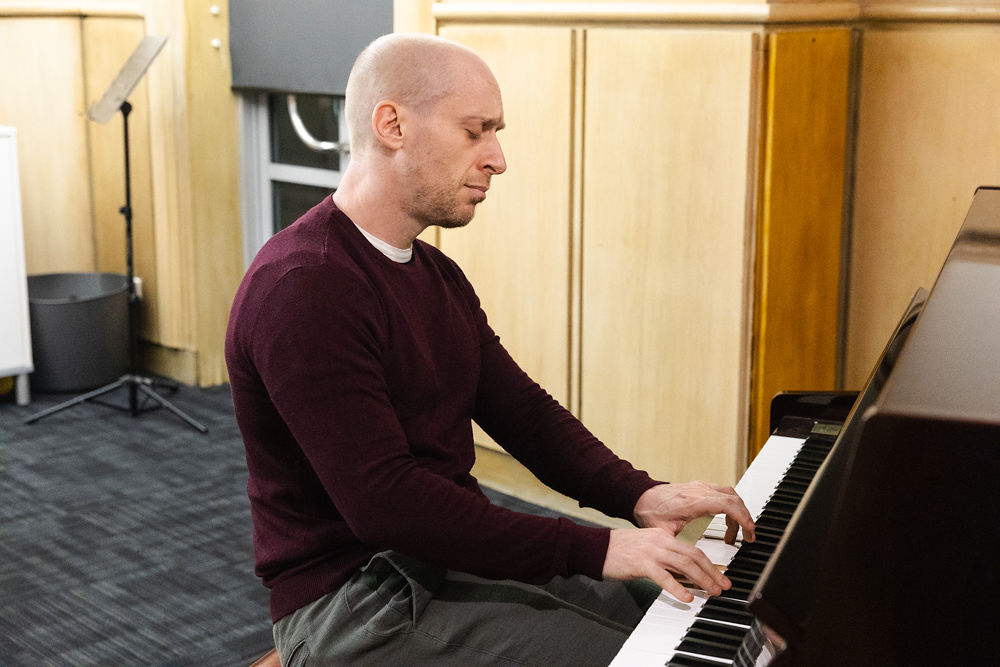
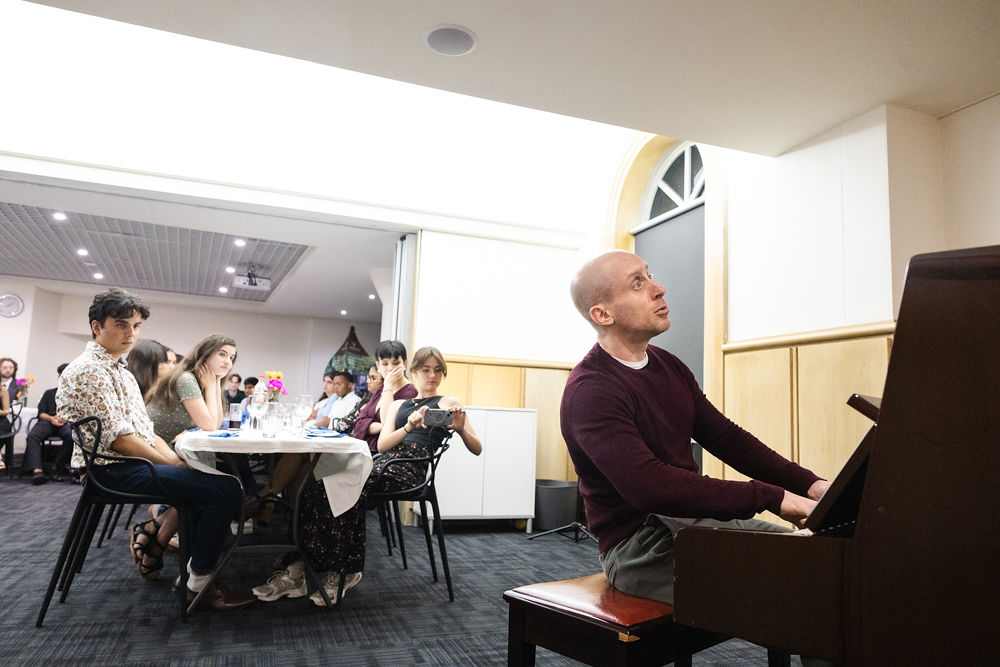
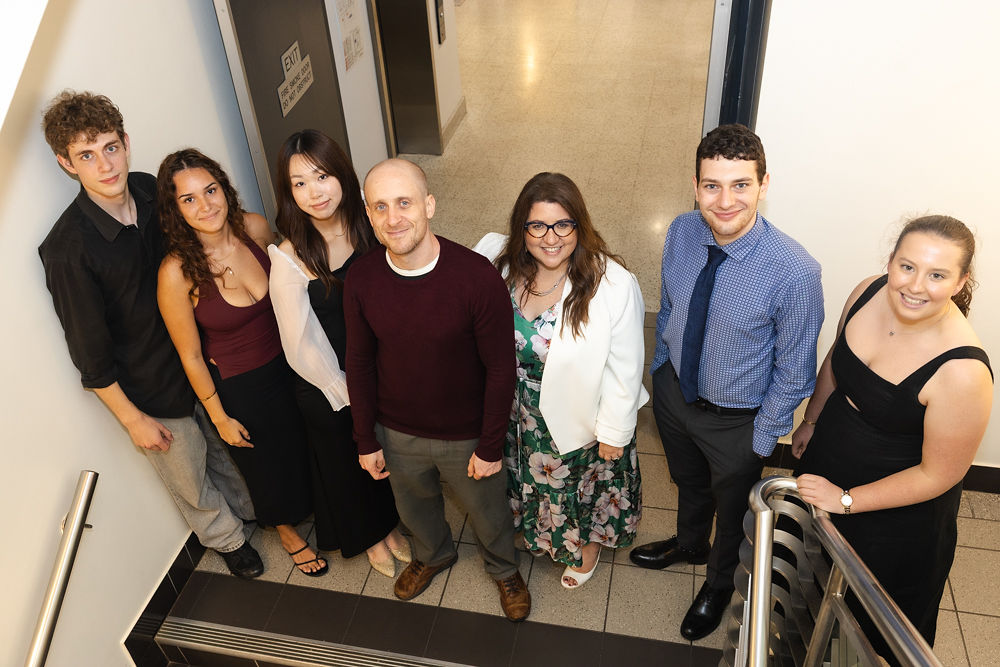
For Mandelbaum House’s second formal dinner of the semester, we were privileged to welcome the internationally renowned pianist, Mr Simon Tedeschi. At the age of nine, Simon performed his first Mozart piano concerto at the Sydney Opera House, and later continued his performance and his studies in the United States. He has received numerous accolades including the Young Performer of the Year Award and the New York Young Jewish Pianist Award.
During his talk, Simon focused on the similarities and differences between two of his preferred genres of music, classical and jazz. The usual perception is that in a classical piece, the music on the page is meant to be stric















tly adhered to and that there is little room for creativity, whereas jazz involves improvisation and allows the performer more liberty. However, music of both genres, as Simon explained, can be serious, wild, disciplined, and moving.
Simon illustrated the difference in the beginnings of the classical and jazz genres; Western classical music originated in monasteries where monks created the Western tonal system that is still used today as the basis of classical music. Jazz, though some of its roots are in this Western system through the influence of hymns, began as the voice of the enslaved and oppressed people taken to the Americas from West Africa, incorporating many of its musical sources.
With jazz, the written material often is not to be recreated exactly by the end of the performance, but simply used as inspiration; elements such as the harmony, the structure, or the melody can be used to become a new rendition of the piece with its own unique character that cannot be reproduced. The performer is expected to contribute something that was not there before. Essentially, the question with jazz pieces is, “What can we do with this source material?”
In the case of classical music, the role of the musician is to analyse what they see on the page and bring it to life, to shape it intelligently. The performer is often trying to reveal what is already there, and is entrusted to interpret the music. The question with classical music tends to be, “How do we realise this work?”
Notably, improvisation exists in both genres, which Simon demonstrated on the piano. Whilst it is a more common feature of jazz performances, some of the most well known figures in
classical music such as Mozart and Bach would often improvise. Simon noted that in earlier periods, classical musicians were expected to be much more spontaneous in their performances.
Both genres have rich histories and intrinsic, intricate theory that manifest in distinct ways; both carry great emotional weight in the form of grief, ecstasy, tenderness, sensuousness, terror, stillness, and joy. Simon’s insights about the contrasts and similarities between classical and jazz music, as well as his improvised demonstrations, palpably fascinated music students, amateur musicians, and non-musicians alike.
Article: A Mandelbaum resident
Photography: @gisellehaberphotography